Business Waste Removal Poplar — Recycling and Sustainability
Business Waste Removal Poplar is committed to creating an eco-friendly waste disposal area and a thriving sustainable rubbish area for local businesses across Poplar and East London. Our approach focuses on practical recycling activity, careful segregation, and reuse pathways that keep materials circulating within the local economy. This page explains our targets, local infrastructure, charity partnerships, vehicle strategy and how we align with borough-level waste separation programmes.

Our Recycling Ambition
We have set a clear recycling percentage target: we aim for a 65% recycling rate of collected business waste by 2030, with interim milestones of 50% by 2026. This target applies across all commercial collections — from retail units and offices to light industrial sites — and is designed to exceed baseline municipal rates for the borough while encouraging circular economy practices in the Poplar business waste removal sector. Our measurements focus on tonnage diverted from landfill and the proportion channelled to repair, reuse, composting and materials recovery.
How We Operate in the Local Waste System
Business waste removal in Poplar is coordinated with local transfer stations and materials processing centres across East London. We regularly deliver separated streams to nearby transfer stations and MRFs where paper, card, plastics, glass and metal are processed. Working with these facilities means we minimise double-handling, improve recycling yields and reduce vehicle miles by planning efficient routing between collection points and the closest processing hubs.
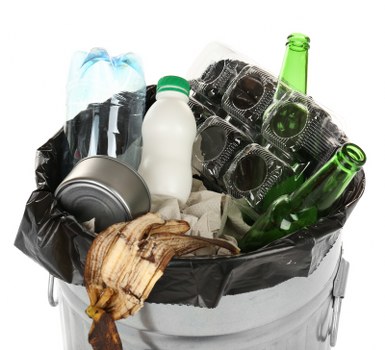
 Our teams follow the borough's approach to waste separation, reflecting guidance used by Tower Hamlets and neighbouring boroughs: clear segregation of food waste, dry mixed recycling (paper, cardboard, plastic, metal, glass), and residual streams. For business clients this often translates into dedicated bins or sacks for:
- Paper and cardboard recycling
- Plastics, cans and glass
- Food and organic waste for commercial composting
- Wood, plasterboard and construction-related materials where applicable
We support on-site separation routines and provide educational materials for staff so that contamination rates are kept low and recycling quality is high.
Local Transfer Stations and Processing
Our network feeds into local transfer stations and partner MRFs in East London and the surrounding boroughs, reducing haul distances and emissions. Using nearby facilities shortens the supply chain between collection and processing, improving the viability of more complex recycling streams such as electronics (WEEE), metals, and mixed construction waste. When materials are suitable, we prioritise local recovery to keep value in the community.
Specific recycling activity relevant to the area includes commercial food waste collections for anaerobic digestion, business textiles diversion to reuse networks, secure IT asset disposal and repair, and pallet and wood recycling for biomass or re-manufacture. These streams help to build a resilient eco-friendly waste disposal area across Poplar and the adjacent boroughs.
Partnerships with Charities and Reuse Organisations
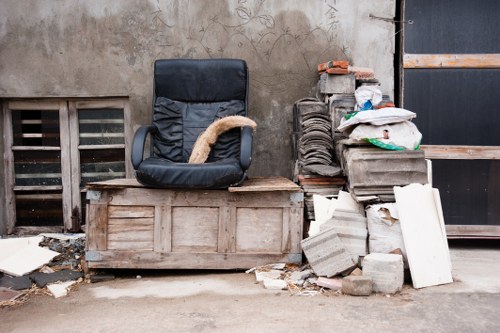
We maintain active partnerships with local charities, community reuse centres and social enterprises to ensure reusable items are recovered from the commercial waste stream. Furniture, working office equipment, surplus building fixtures and textiles are assessed for reuse and directed to charity partners that support training programmes and local employment initiatives. This creates social value while improving the sustainability of Poplar business waste removal services.
To maximise reuse, our crews perform an initial onsite triage when collecting larger items, identifying candidates for direct donation. Items that cannot be reused are prepared for recycling or material recovery in the most appropriate stream. Our charity partnerships reduce disposal costs for clients and extend the lifecycle of valuable resources.
Low-carbon vans are central to our commitment to a low-emission service model. Our fleet includes electric vans for short urban rounds and Euro-6 compliant low-emission hybrids for heavier loads and longer suburban routes. Route optimisation software, paired with driver training on eco-driving, reduces fuel consumption and helps us lower carbon intensity per tonne of waste collected.
We also track vehicle emissions as part of our sustainability dashboard, reporting progress against targets. Combining low-carbon vehicles, smarter routing, and local processing achieves meaningful reductions in transport-related emissions for Poplar business waste removal while maintaining reliable service levels.
Supporting Borough Strategies and Business Clients
Our operational model aligns with borough-level initiatives encouraging waste segregation and higher recycling rates. We work with businesses to translate municipal guidance into commercial practice, offering scalable solutions for small shops through to large warehouses. By integrating with local policies and contributing data on commercial recycling performance, we support broader sustainability ambitions across Poplar and nearby communities.
 In practice, that means tailored collection schedules, clear labelling of containers, and collaborative planning for special waste streams such as hazardous commercial chemicals, solvent-based waste or controlled electronic disposals. When businesses adopt these practices, it fortifies the entire local recycling ecosystem and helps reach the shared recycling percentage target.
Conclusion: Our focus on an sustainable rubbish area and an eco-friendly waste disposal area for Poplar businesses combines ambitious recycling targets, partnerships with local transfer stations and charities, and a modern low-carbon fleet. This integrated approach ensures that commercial waste is handled responsibly, reused when possible and recycled efficiently — contributing to a cleaner, greener Poplar for business and community alike.
